We build the quiet software that keeps businesses running.
SERT PROPERTY VENTURES LTD is an independent technology practice. We design, engineer and operate custom software, cloud systems and business automation for organisations that value dependable work over noise.
Practice · 01
Custom software
Practice · 02
Cloud infrastructure
Practice · 03
Automation
Practice · 04
Security & data
An independent studio for software that has to be correct, understood and maintained for years.
We work at the intersection of engineering and operations. That means the applications we build are shaped by the workflows around them — from the way a request is logged to how a report is finally read on a Monday morning.
Our role is to remove ambiguity from the technology side of a business: writing code that is legible, choosing infrastructure that is reasonable, and documenting decisions so that future teams — including our own — inherit clarity rather than surprises.
Eight practices, one team, one direction.
Every project draws on a small combination of the practices below. We assemble the right mix rather than defaulting to a template.
- SW
Custom software
Bespoke applications engineered around the way a business actually operates.
- WEB
Web applications
Performant browser-based systems, portals and internal tools.
- AUT
Business automation
Workflows, integrations and processes that remove repetitive manual work.
- CLD
Cloud & infrastructure
Deployment, scaling and lifecycle management on modern cloud platforms.
- DAT
Data management
Pipelines, warehousing and reporting that turn scattered records into usable information.
- SEC
Security consulting
Assessments, hardening and governance aligned to recognised frameworks.
- INT
System integration
Reliable connections between the tools, services and databases in your stack.
- UX
UI/UX design
Interfaces that are legible under pressure and clear to the people who use them daily.

Sectors where we tend to be useful.
The technical work is transferable; the value comes from understanding operational detail. These are the sectors whose rhythms we know best.
- 01Financial services
- 02Property & real estate
- 03Professional services
- 04Healthcare operations
- 05Logistics & supply
- 06Retail & e-commerce
- 07Manufacturing
- 08Public sector suppliers
§ 04 — Process
Four movements, in order.
We follow the same rhythm for a two-week integration and a two-year platform build. Only the amplitude changes.
- 01Phase
Listen
We map the current state — systems, workflows, constraints — before proposing anything.
- 02Phase
Frame
We agree on a small, specific problem to solve first, with measurable outcomes.
- 03Phase
Build
We ship in short iterations, keeping code, documentation and infrastructure in sync.
- 04Phase
Operate
We support the system in production and adapt it as the business evolves.
We choose boring technology for the parts that must not break, and modern tools where they earn their place.
A production system is a long-lived object. Its total cost is dominated by what happens after launch: change, observation, correction, retirement.
We favour proven languages, mature databases and standard protocols for the load-bearing pieces, and reserve newer tools for the layers where change is genuinely valuable.
We keep infrastructure declarative, deployments repeatable, and dependencies documented — so the people who inherit our work can read it before they change it.
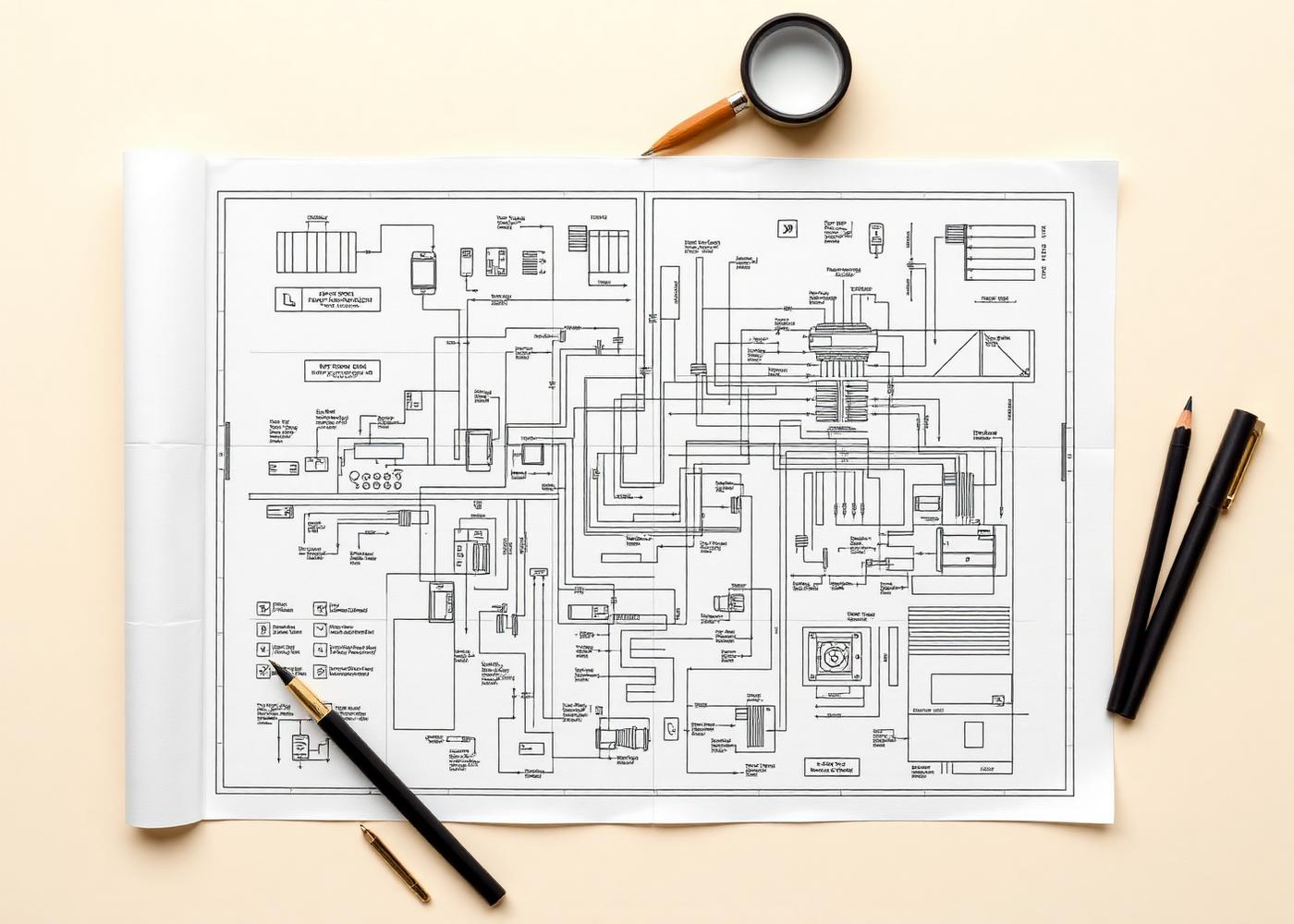
Remove the copy‑paste from Monday morning.
Most organisations lose several hours a week to the same handful of manual tasks: moving data between systems, chasing approvals, reconciling reports. We identify those tasks and replace them with reliable, observable processes.
- Data movement
- Scheduled and event-driven flows between the tools you already use, with clear failure handling.
- Approval workflows
- Auditable routing for reviews, sign-offs and exceptions — with the trail preserved.
- Reporting
- Consolidated views built once and refreshed on a schedule, not rebuilt by hand each week.
- Internal tools
- Small, focused interfaces for the operational tasks that spreadsheets outgrew.

Infrastructure that is sized to the actual workload.
We provision what a system needs and no more. That keeps operating costs sensible, keeps the surface area of the platform inspectable, and keeps out‑of‑hours pages rare.
For every environment we agree on backup strategy, restore procedures and the observability signals that matter. These are recorded in runbooks, not held in someone's head.
§ 08 — Security & reliability
Assumptions, written down.
Security is not a feature we bolt on at the end. It is a series of decisions — about identity, access, secrets, dependencies, backups and logs — taken at the start and revisited on a schedule.
Identity & access
Least privilege by default; access reviews at defined intervals.
Secrets
Stored in managed vaults; rotated on schedule; never in source control.
Dependencies
Tracked, scanned and updated as part of ordinary maintenance.
Observability
Structured logs, metrics and traces so incidents can be reconstructed.

Direct, small, careful.
- 01
A single team, from brief to production.
You speak to the people who write the code. Context is not lost across handovers.
- 02
Written proposals, plain language.
Scope, assumptions and constraints are on the page before the engagement starts.
- 03
Small increments, visible early.
Working software goes into a shared environment quickly, so decisions are made on evidence.
- 04
Documentation is part of delivery.
Every project ships with the notes needed to run and evolve it.

How a week with us looks.
- MondayShort written update; priorities agreed for the week.
- MidweekWorking session on the current increment; open questions surfaced early.
- ContinuouslyChanges deployed to a shared environment as they're ready, not saved for release day.
- FridayReview of what shipped, what didn't, and what changes for next week.
Questions we hear often.
- How do engagements typically start?
- With a written brief and a working conversation. We prefer to understand the operational context before we discuss technology or timelines.
- Do you work with existing codebases?
- Yes. Much of our work involves stabilising, extending or modernising software that already exists rather than starting from scratch.
- Which cloud platforms do you use?
- We select the platform to fit the workload — commonly AWS, Azure, Google Cloud or Cloudflare — and avoid unnecessary vendor lock-in where practical.
- How do you handle sensitive data?
- Data handling is scoped at the start of every engagement, with encryption, access controls and retention policies documented and reviewed.
- Can you support software you did not build?
- In many cases, yes. We take on maintenance and improvement work provided the codebase is inspectable and the scope is well defined.
§ 12 — Correspondence
Written enquiries are the fastest way to reach us.
Company
SERT PROPERTY VENTURES LTD
corahall1986@gmail.com
Website
sertproperty.com